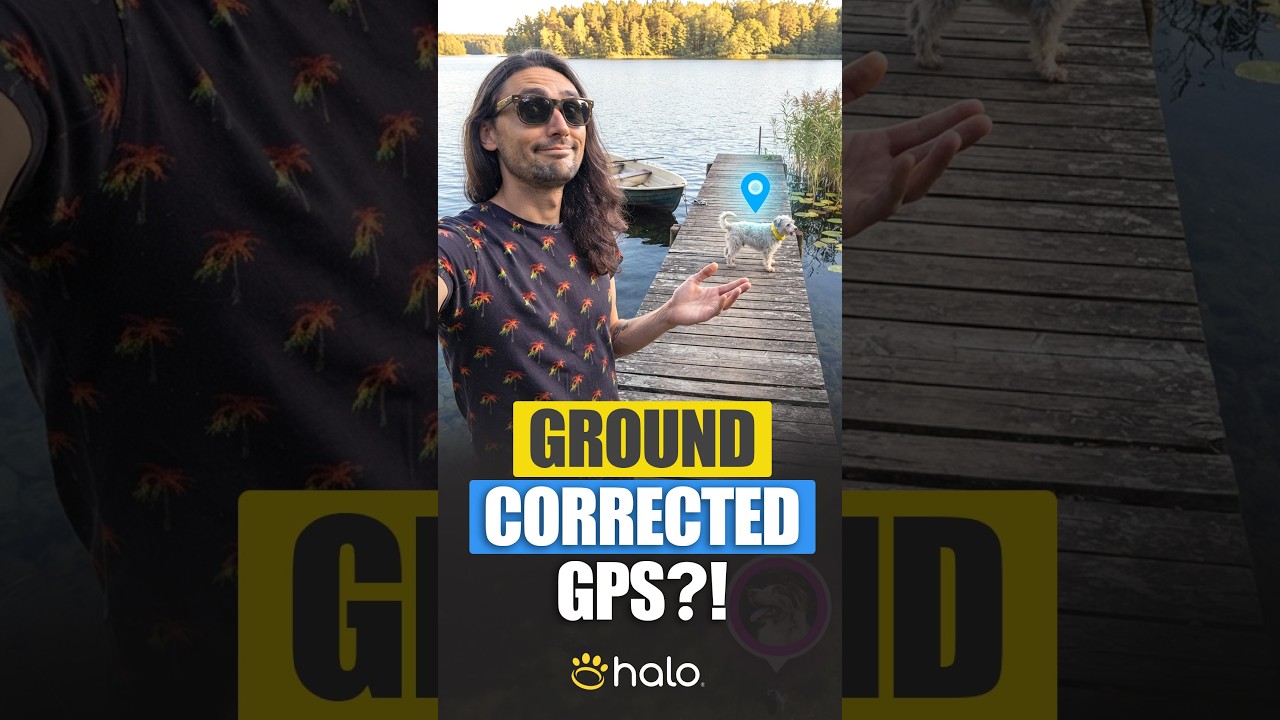
If you let your dog have some time outdoors, you will need to keep an eye on where they go. If the space is small, the dog will be very easy to monitor, but if there is a vast area to cover or if the dog has a tendency to stray, then things get a little more difficult. The GPS collar allows the owner to track the whereabouts of the dog using a phone app. However, it is vital to keep in mind that the precision of the dog’s position is not to be underestimated, especially when the dog is nearing the border region.
One such location-based function is Precision+, which is helpful. This function improves the localization accuracy as demonstrated in the application compared to standard GPS. GPS can be wrong by a few feet sometimes. This may not be a concern in most circumstances. However, in the event of the dog approaching the borders, GPS Accuracy can be helpful.
This is particularly helpful when dealing with locations near lakes, property lines, or backyard boundaries. The dog might be perfectly safe in that region, but the location could not be accurate. The more accurate the position tracking, the less uncertainty is linked with it. This is why you should include this part while writing a Halo Collar Review, as GPS dog collars are quite beneficial when the precision of position monitoring is high. The reliability of the location tracking information makes it much easier for users to utilize the system to keep tabs on their dogs when they are not at home.
The tracking function is also quite convenient in daily life. As a GPS dog tracker, you may check the current position of the pet in the appropriate app. This option is useful if the dog is in the backyard and is no longer visible or is exploring the property. You don’t have to run out of the home and start hunting for the dog; you can open the app and see if you need to do something about the matter or not.
Positioning becomes considerably more crucial if there are virtual limits. The correct location data is essential for an intelligent dog collar to calculate the real position of a dog in relation to the selected boundary. If the site continues shifting, it is more challenging to determine the vicinity of the border. This is where a GPS dog fence comes in handy and may be used by those folks who are unable to set up a traditional fence. It allows dogs to roam free, but offers the option of controlling them with the use of GPS technology.
While GPS tracking is not entirely dependable and depends on variables including adjacent buildings, tree canopy cover, the geography of a region, and signal conditions, an improvement in the precision of position data might be useful for everyday usage. The new GPS capabilities will undoubtedly be appreciated by those pet owners who need to follow their dog outdoors, view their whereabouts using a smartphone application, and set virtual borders. This is the sole advantage that can be mentioned here. It is obvious that more precise location data equals less guessing about your dog’s whereabouts.
Comments
Post a Comment